Last week I had a discussion with Ricky Berry from RB5 on HIIT Training. You’ve probably heard the term, particularly during lockdown, but what exactly is it? Who is it for? How can it be implemented.
Here is my take on it………

HIIT can be described as “repeated bouts of short to moderate duration exercise (i.e. 10 seconds to 5 minutes) completed at an intensity that is greater than the anaerobic threshold” Laursen & Jenkins 2002.
If you train with me or follow my workouts, you’ll probably be familiar with the concept described above.
Periods of work on an exercise, followed by periods of rest.
You don’t turn up to train with me and I send you out for a 5km run, which would be described as traditional ‘Steady State’ cardio.
Now, there’s absolutely nothing wrong with this type of training and for fat loss, most studies find very similar results when comparing HIIT to Steady State.
So why do I focus much of my clients training on HIIT type training.
“From a health point of view, HIIT is exciting, as it seems to produce a number of beneficial physiological effects with only a very small investment of time” Gibala etc al. 2012
One of the major factors is that I believe it to be more time efficient.
People may only have a small window to train and I believe that they can get more out of a HIIT style workout that a Steady State session.
Again, I am not disregarding the effectiveness of Steady State work – if my client has 1 hour to train, I can fit in mobility, strength, bodybuilding and HIIT all in the one session.
I would struggle to achieve the desired training effect if I had them on a stationary bike for 45 minutes of that hours session.
I can also combine some resistance based (weights) withing a HIIT session that has favourable benefits on strength, building muscle and dropping body fat – that cannot be achieved by going out for a run.
I will give examples of these later in the article.
Another benefit of HIIT style training is that it can be more enjoyable, thus leading to a greater adherence to the plan.
By enjoyable I mean that there are many tools and strategies to use, to keep clients engaged.
Doing exercises like Med Ball Slams, KB Swings, Battle Rope Waves, Ski Erg Sprints etc can be more appealing than going for an hours run on the treadmill.
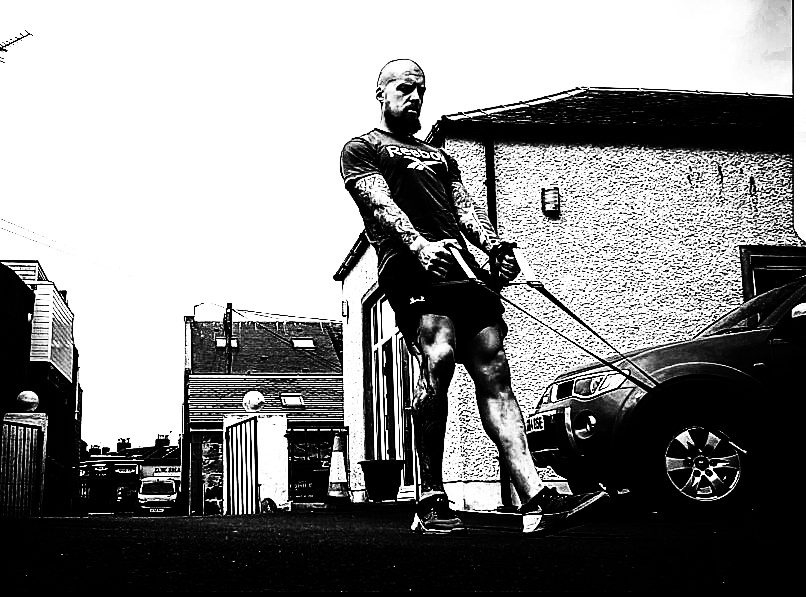
HIIT doesn’t need to be a Joe Wicks workout in your living room. It can be a 6 minute block of 40s work / 20s rest of Farmers Walks, Sprints, KB Swings etc.
Just my opinion, that is echoed by many of my clients.
There are, of course, times that this isn’t the right choice for you or your client.
If you are really deconditioned, overweight or are a complete beginner then you might not get the most from HIIT workouts.
You may not be able to work hard enough during the work intervals to elicit the training response.
HIIT sessions should be done at ‘High Intensity’ (which will differ for every individual) – if you don’t have the capacity to train at this level then they won’t be effective.
If you can’t work at a high intensity then it’s not HIIT.
In this case I would actively encourage more Steady State work in order for you to build up your engine.
Another reason that HIIT might not be the best choice is if you are really dieting down for a bodybuilding show.
When you are seriously cutting calories, you won’t be firing on full cylinders and you should be focusing your higher intensity work on lifting weights. Here you should be using Steady State to assist with the fat burning process. You will be able to cope with 45 minutes on a Crosstrainer on top of your weights routine instead of smashing a HIIT circuit.

Bodybuilders are typically the leanest people to walk the planet. Their traditional workouts were made up of banging weights and long walks.
Here are a couple of examples of HIIT style sessions.
Bodyweight Only:
Work in 6 minute blocks with a work/rest ratio of 30s/30s for 6 rounds giving you 6 minutes of work.
Stick with the same exercise for all 6 rounds, complete 3 blocks (total workout time 18 minutes)
Block 1: Burpees
Block 2: Running Sprints
Block 3: Jump Squats
Interval Weight Training (IWT):
Complete 3 rounds of the cycle.
10 x Back Squat
2 Min Airdyne Max Effort
2 Min Rest
Then 3 rounds of the second part.
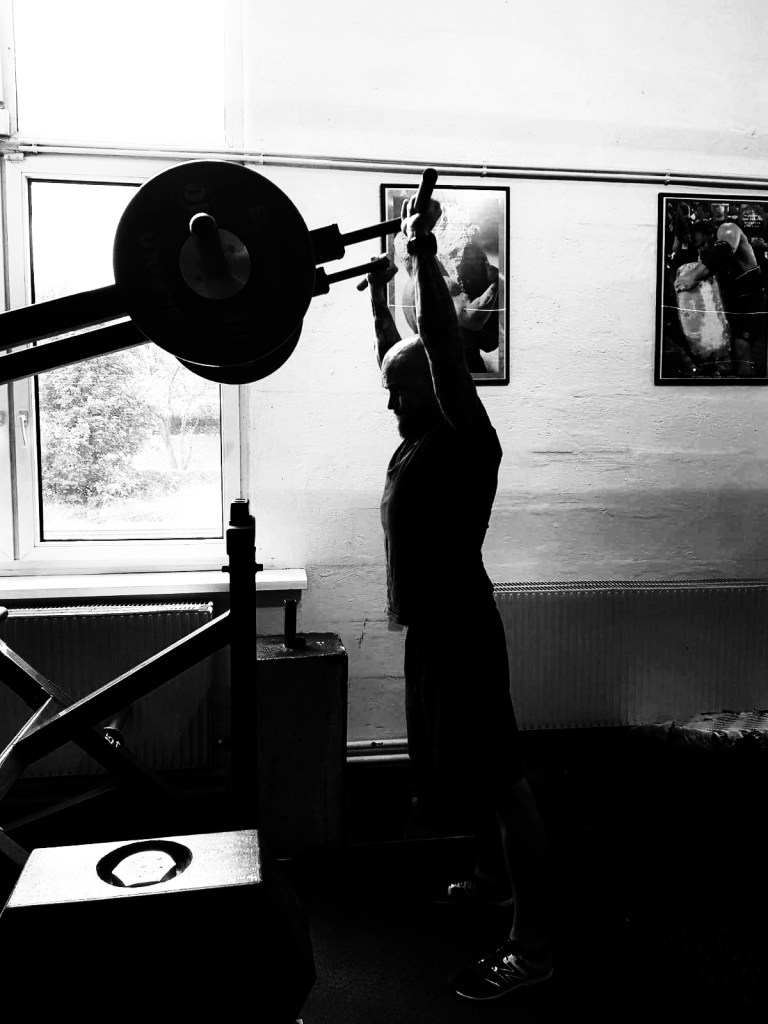
10 x Push Press
2 Min Row Max Effort
2 Min Rest
Both these examples can be scaled but they are not for beginners. You should have a decent level of fitness before attempting these.
HIIT workouts should be used as a tool.
Can using these in some capacity help you take you from where you are to where you want to be?
Are you physically ready to perform them?
Do you enjoy this type of training?
Can you stick to HIIT workouts?
Personally, I enjoy them. My clients enjoy them and we get the results they are looking to obtain.
It doesn’t make it the only way to get in shape.

 Coach Milligan